


Trusted us by over 3,000 local businesses
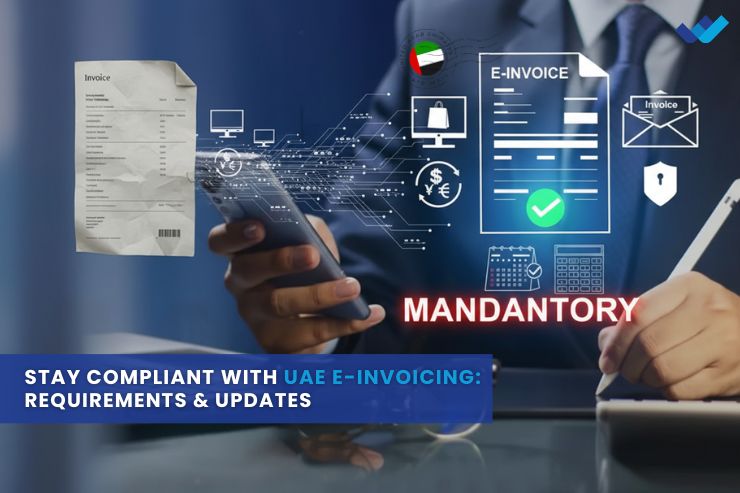
This is not simply a compliance update — it is a major change to the entire process of creating, exchanging, and storing invoices.
E-invoicing involves issuing, transmitting, capturing, storing, and reporting invoices digitally through approved channels, with structured data and secure archiving to meet strict FTA requirements. The new system utilizes the globally recognized PEPPOL 5-corner model, ensuring seamless, secure data exchange between companies, service providers, and UAE authorities.
As a trusted advisory firm, Hussain Al Shemsi Chartered Accountants supports businesses with e-invoicing implementation, PEPPOL onboarding, FTA compliance, digital transformation, and audit-ready documentation, ensuring a smooth transition to the new system.
The e-invoicing rollout is planned in phases: accreditation of service providers in 2024, publication of related legislation in 2025, and Phase 1 mandatory compliance for large corporations by mid-2026.
| CATEGORY | REQUIREMENT / TIMELINE |
|---|---|
| Pilot Phase | Begins July 2026 — early adopters test and refine their systems. |
| Large Businesses ≥ AED 50 million revenue | Must appoint an Accredited Service Provider by 31 July 2026 and go live by 1 January 2027 |
| Businesses < AED 50 million revenue | Must appoint an Accredited Service Provider by 31 March 2027and go live by 1 July 2027 |
| Government Entities | Go-live by 1 October 2027 |
| Model Used | PEPPOL 5-Corner Model — a globally standard ensuring seamless, secure data exchange between businesses, service providers, and the FTA |
Hussain Al Shemsi Chartered Accountants supports businesses with:
The UAE is moving forward with its tax digitization strategy through the introduction of mandatory e-invoicing under the Electronic Invoicing System (EIS). A pilot phase will begin in July 2026, followed by a phased rollout from 2027, starting with large businesses and gradually extending to all VAT-registered entities for B2B and B2G transactions.
Accredited Service Providers (ASPs) will be essential in transmitting and validating invoices via the FTA’s e-billing platform, ensuring accuracy, authenticity, and secure storage within the UAE. With strict compliance obligations and penalties for non-adherence, businesses should begin preparing early—upgrading ERP systems, reviewing processes, and aligning operations with the new e-invoicing requirements.
Get in touch with us today to learn how Hussain Al Shemsi Chartered Accountants can support your compliance journey.
Get in touch with Hussain Al Shemsi Chartered Accountants for expert auditing, accounting, tax, and advisory services in the UAE.



Hussain Al Shemsi Chartered Accountants is a full-service professional chartered accountant firm, licensed by the Ministry of Economy, United Arab Emirates, to practice auditing and accounting.
Buhaira Insurance Tower, #402, 4th Floor, Opp. Al Noor Mosque, Al Majaz 1, Sharjah, UAE
PO Box: 3950© 2026 Hussain Al Shemsi. All rights reserved. Designed
WhatsApp us
